
How to Read a Peptide Certificate of Analysis
A field-by-field guide to interpreting the documentation that accompanies a synthetic peptide lot.
A Certificate of Analysis is a lot-specific document issued by a manufacturer to report the results of analytical testing performed on a single production batch. The document accompanies the physical shipment and is the primary technical reference for evaluating the identity, purity, and composition of a research compound.
Lot number and compound identity
The lot or batch number is a unique alphanumeric identifier linking the document to a specific production run. A COA without a lot number, or one whose lot number does not match the label on the physical vial, should be treated as unauthenticated. Compound identity is expressed as a common name, IUPAC name, CAS registry number, and amino acid sequence for peptides.
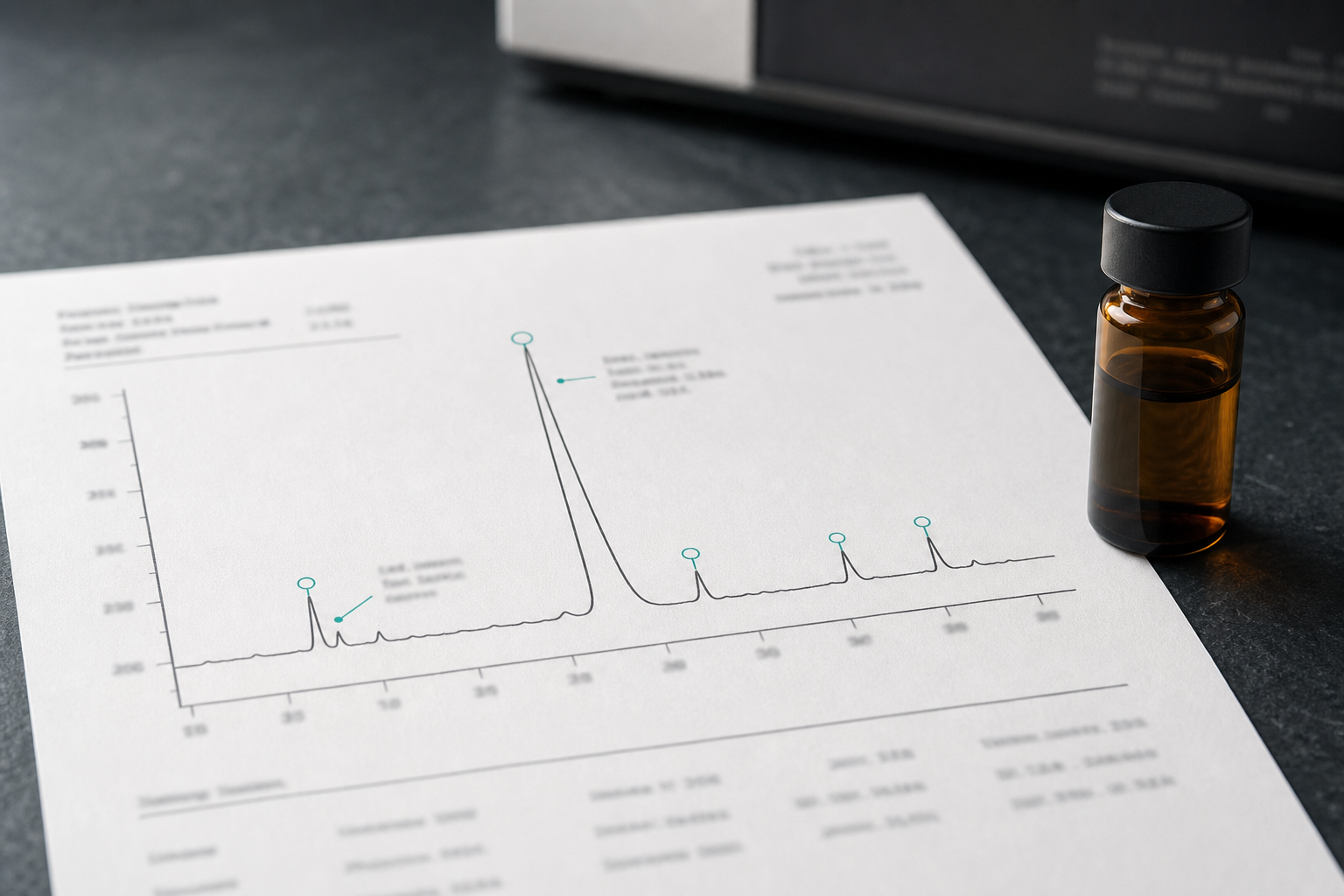
Purity by HPLC
HPLC purity is reported as a percentage of the integrated area under the main chromatographic peak relative to all detected peaks. A value of 98 percent means that 98 percent of the UV-absorbing material eluting from the column was attributed to the target compound. This figure does not address whether the compound is correctly identified; it addresses only relative compositional purity.
Identity by mass spectrometry
Where HPLC establishes relative purity, mass spectrometry establishes molecular identity. The COA should report the theoretical mass of the target compound, the observed mass as measured, and the acceptable deviation. An observed mass within two daltons of the theoretical value for a typical research peptide is considered a passing result, though tolerances vary by method.

Net peptide content
Gross vial weight and net peptide content are not equivalent values. Lyophilized peptide preparations contain residual counterion salts, most commonly trifluoroacetate from the synthesis process, as well as trace moisture. Net peptide content describes the fraction of the vial mass attributable to the peptide itself. A 10 mg vial with 80 percent net peptide content contains approximately 8 mg of active compound.
Research Use Only
This product is supplied strictly for laboratory research workflows. It is not offered for food, drug, cosmetic, veterinary, agricultural, or household use. By purchasing, the buyer represents they are a qualified researcher and accepts all responsibility for proper handling, storage, and lawful research use.