
Solid-Phase Peptide Synthesis: A Beginners Guide
SPPS is the foundational manufacturing method for synthetic research peptides. Understanding the process helps researchers interpret COA data and evaluate supplier claims.
Solid-phase peptide synthesis is the standard method for producing synthetic peptides at research scale. First described by Merrifield in 1963, the technique assembles amino acid chains one residue at a time on an insoluble polymer support, allowing excess reagents to be washed away at each step rather than separated from product in solution.
The solid support
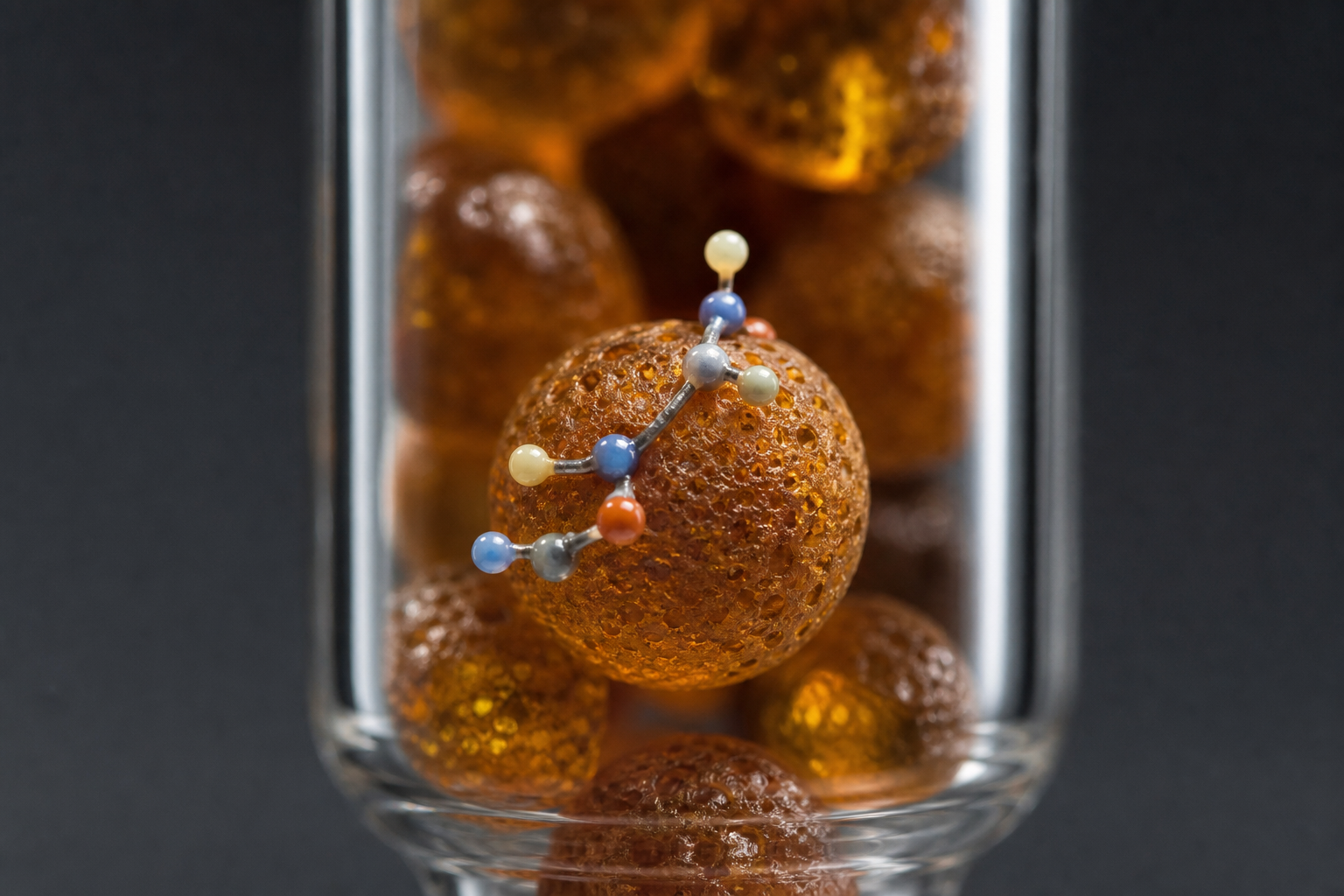
Synthesis begins by anchoring the C-terminal amino acid of the target sequence to a functionalized resin bead. Common resin types include Wang resin for sequences requiring a free C-terminal acid and Rink amide resin for sequences requiring a C-terminal amide. The C-terminal amide modification improves in-vitro stability characteristics for many research peptides.
The coupling cycle
- Deprotection: the temporary protecting group on the terminal amine is removed, typically using piperidine in DMF for Fmoc chemistry.
- Coupling: the incoming protected amino acid is activated and reacted with the free amine. Incomplete coupling at any step introduces deletion sequences into the final product.
- Capping: unreacted amines are acetylated to terminate failed sequences, preventing truncated chains from continuing to grow.
- Wash: excess reagents are removed before the next cycle begins.
Cleavage and purification
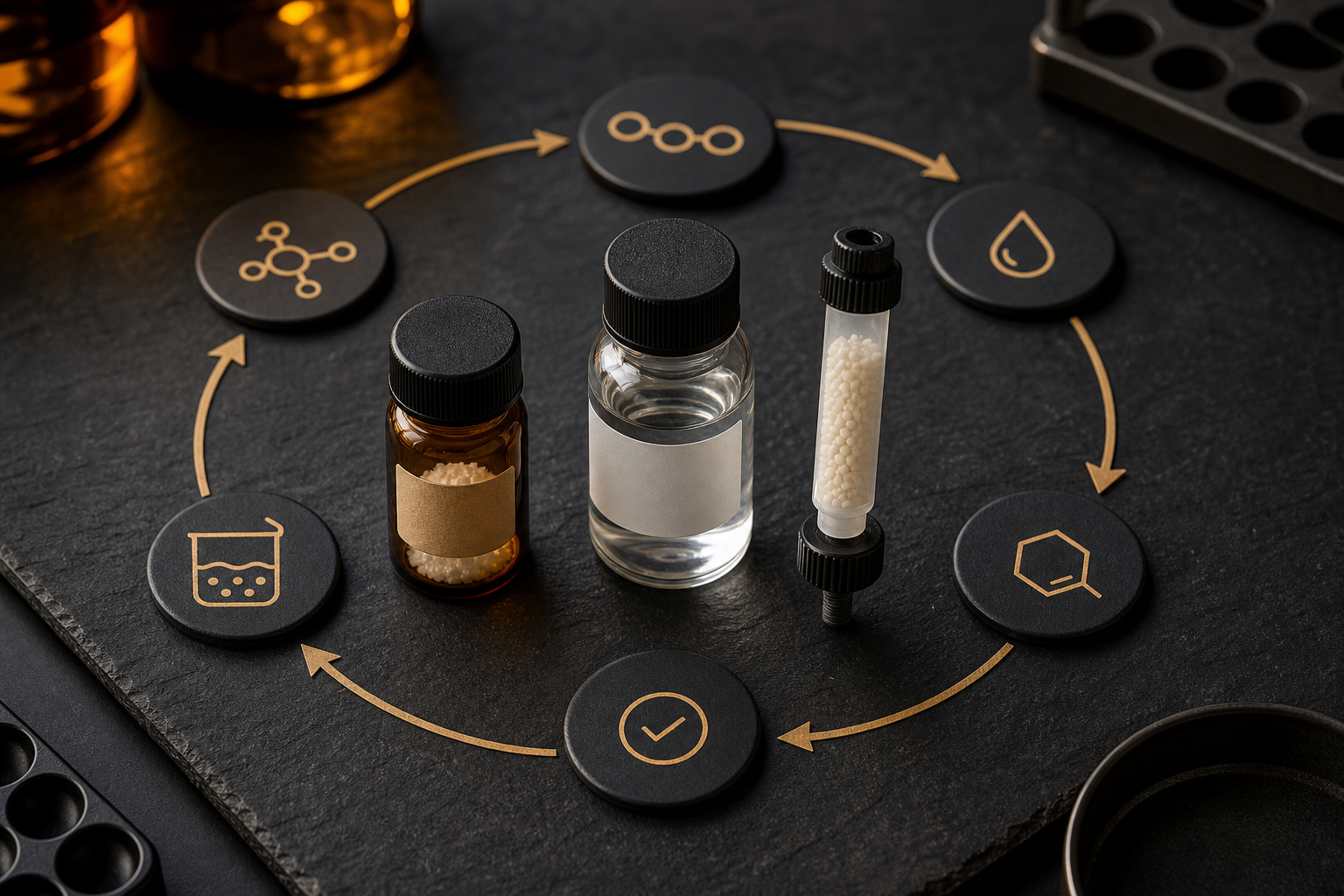
Once the full sequence is assembled, the peptide is cleaved from the resin and side-chain protecting groups are removed using a cocktail of trifluoroacetic acid and scavengers. The crude cleavage product contains the target peptide alongside deletion sequences, truncated chains, and oxidation products. Preparative reverse-phase HPLC separates the target compound from these impurities. The purity figure on a finished lot COA reflects the outcome of this entire synthetic and purification sequence.
Research Use Only
This product is supplied strictly for laboratory research workflows. It is not offered for food, drug, cosmetic, veterinary, agricultural, or household use. By purchasing, the buyer represents they are a qualified researcher and accepts all responsibility for proper handling, storage, and lawful research use.