GLP-1 / Metabolic
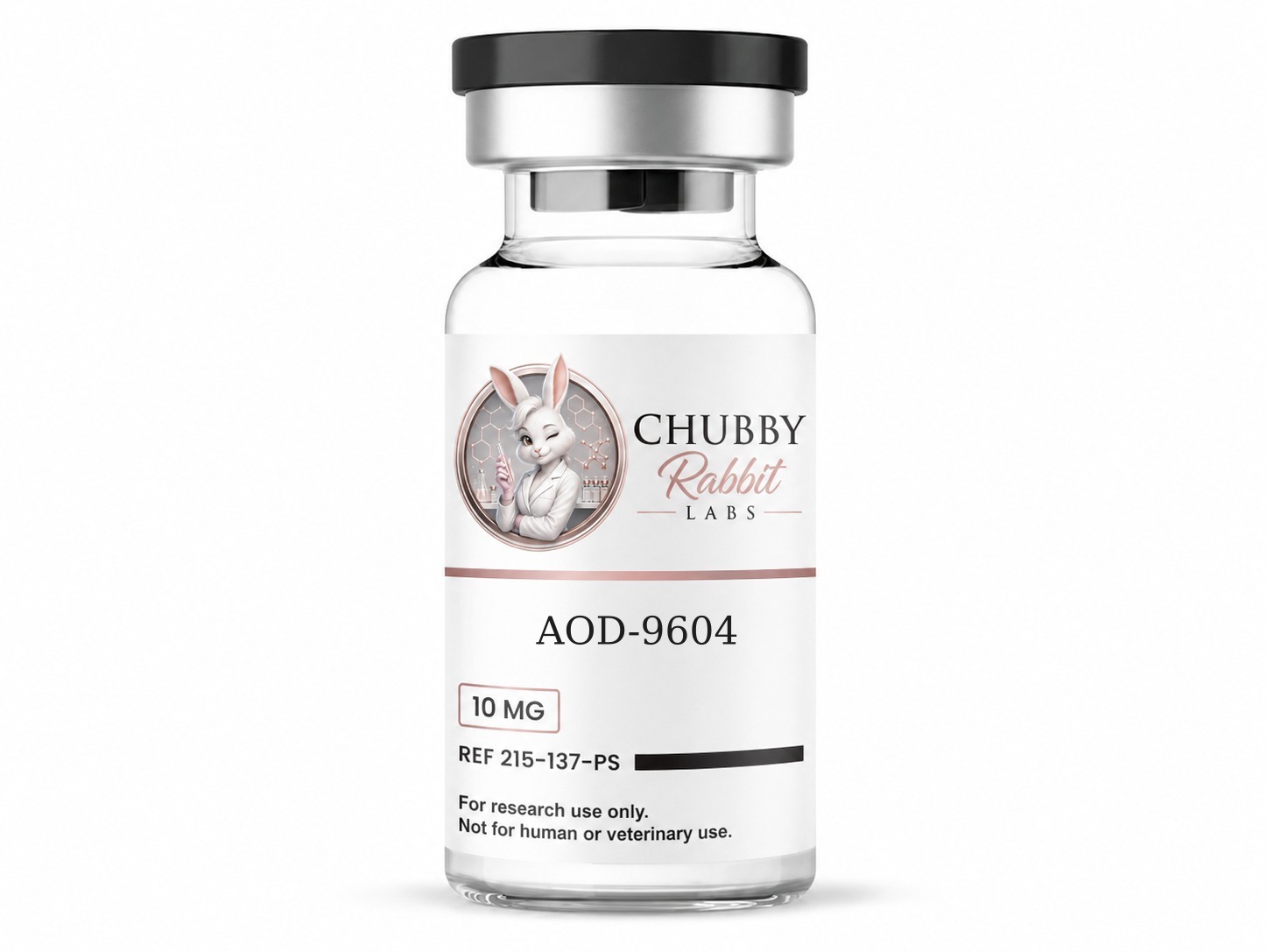
AOD-9604
From$155
1 size
Research use only
Order 3+ and save. Contact us for bulk pricing.
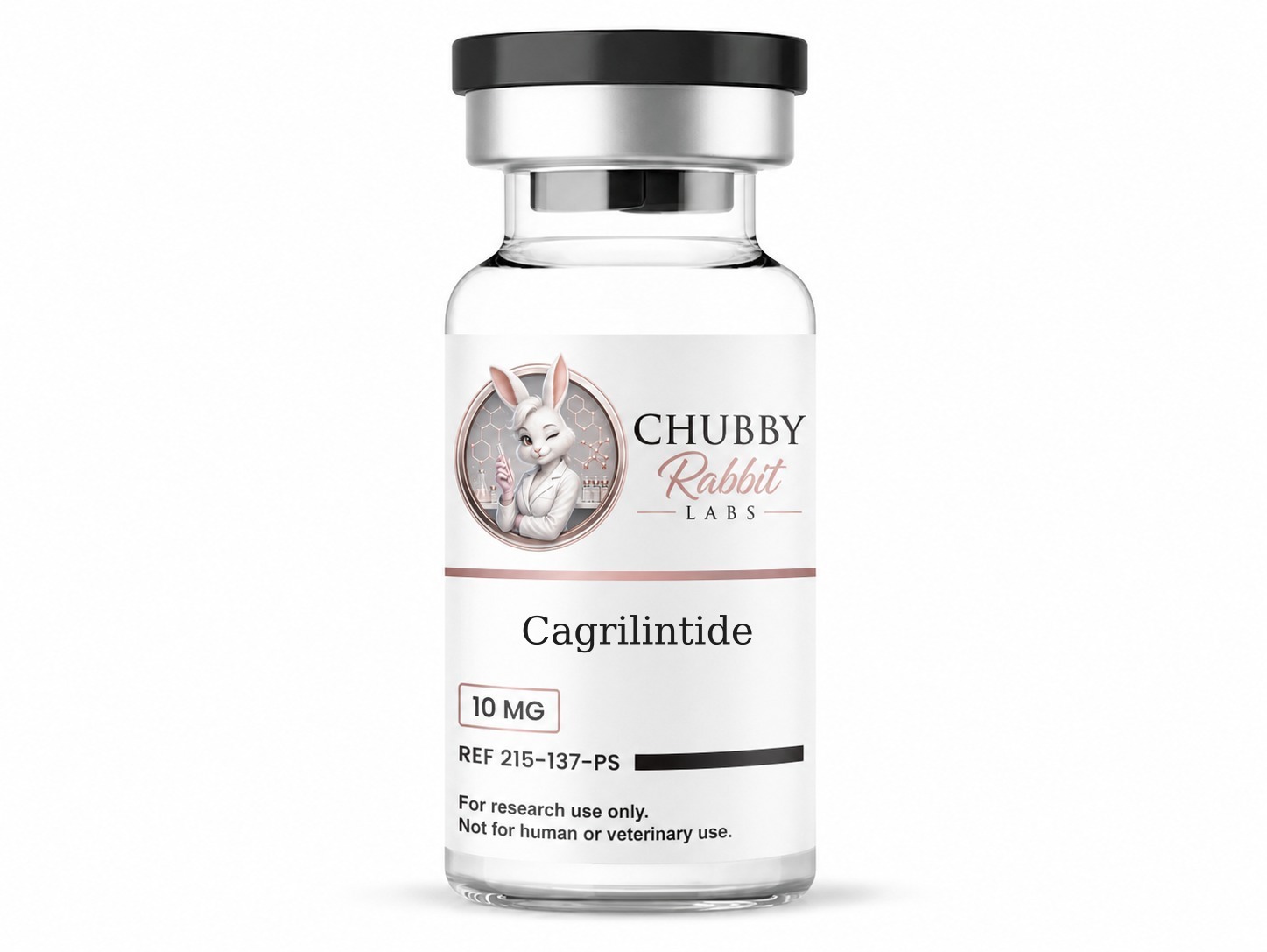
Cagrilintide (AM833) is a long-acting acylated analog of amylin, a 37-amino acid peptide hormone co-secreted with insulin by pancreatic beta cells in response to nutrient ingestion. Native amylin acts on amylin receptors in the brainstem and hypothalamus to slow gastric emptying, suppress postprandial glucagon secretion, and promote satiety by engaging descending hypothalamic circuits regulating food intake. Cagrilintide was engineered with amino acid substitutions to reduce aggregation propensity relative to native amylin and pramlintide, and with a fatty acid chain attachment enabling reversible albumin binding to extend its plasma half-life, supporting once-weekly subcutaneous dosing. The pharmacological mechanism of cagrilintide involves agonism at calcitonin receptor-based amylin receptor complexes (AMY₁, AMY₂, AMY₃) expressed in the area postrema and nucleus tractus solitarius of the brainstem, as well as in the hypothalamic arcuate nucleus. These receptor subtypes mediate satiety signaling through descending circuits involving neuropeptide Y and pro-opiomelanocortin neurons in the hypothalamus. Research indicates that amylin receptor agonism produces complementary effects to GLP-1 receptor agonist signaling through distinct but convergent neural pathways, providing a mechanistic rationale for combination therapeutic approaches targeting both receptor systems simultaneously. Clinical investigations of cagrilintide as a monotherapy established its dose-dependent effects on body weight in individuals with overweight or obesity. Phase 1b and Phase 2 dose-finding studies indicate that once-weekly subcutaneous administration of cagrilintide over up to 26 weeks produced clinically meaningful reductions in body weight, with higher doses producing greater weight loss responses across the studied range. Studies also indicate reductions in waist circumference and improvements in cardiometabolic risk markers including systolic blood pressure and fasting lipid levels in treated participants, consistent with benefits associated with significant weight reduction. The combination of cagrilintide with semaglutide (CagriSema) has been extensively investigated, based on the hypothesis that simultaneous amylin and GLP-1 receptor co-agonism produces additive or synergistic effects on appetite regulation and weight loss. A Phase 2 study published in The Lancet demonstrated that CagriSema produced substantially greater weight reductions than either component administered alone, with mean weight reductions of approximately 17% observed over 20 weeks in the highest-dose group studied. Research suggests the combination produces complementary effects on gastric emptying rate, central appetite circuits, and post-meal glucagon suppression, providing a mechanistic basis for the enhanced efficacy signal. Studies investigating the safety and tolerability profile of cagrilintide report that gastrointestinal adverse events—including nausea, vomiting, and decreased appetite—represent the most common side effects, consistent with the class effects of amylin receptor agonism. Research indicates these events are dose-dependent, more prominent during dose escalation phases, and generally diminish with continued treatment as tolerance develops. Clinical data suggest that the tolerability profile of cagrilintide is broadly similar to that observed with the approved amylin analog pramlintide, though the extended pharmacokinetic profile of cagrilintide necessitates different dosing and titration strategies to manage gastrointestinal tolerability. References: [1] Enebo LB, Bagger JI, Simonsen L, et al. (2021). Safety, tolerability, pharmacokinetics, and pharmacodynamics of cagrilintide with semaglutide 2·4 mg for weight management in adults with overweight or obesity: a randomised, controlled, phase 1b trial. The Lancet, 397(10286), 1736–1748. PMID: 34015345 [2] Lau DCW, Erichsen L, Francisco AM, et al. (2023). Once-weekly cagrilintide for weight management in people with overweight and obesity: a multicentre, randomised, double-blind, placebo-controlled and active-controlled, dose-finding phase 2 trial. The Lancet, 402(10403), 965–976. PMID: 37355111 [3] Hay DL, Garelja ML, Poyner DR, Walker CS. (2018). Update on the pharmacology of calcitonin/CGRP family of peptides: IUPHAR Review 25. British Journal of Pharmacology, 175(1), 3–17. PMID: 28847006 [4] Reidelberger RD, Kelsey L, Heimann D. (2002). Effects of amylin-related peptides on food intake, meal patterns, and gastric emptying in rats. American Journal of Physiology—Regulatory, Integrative and Comparative Physiology, 282(5), R1395–R1404. PMID: 11959681 [5] Lutz TA. (2010). The role of amylin in the control of energy homeostasis. American Journal of Physiology—Regulatory, Integrative and Comparative Physiology, 298(6), R1475–R1484. PMID: 20357020 For research use only. Not for human or veterinary use.