Products/AOD-9604
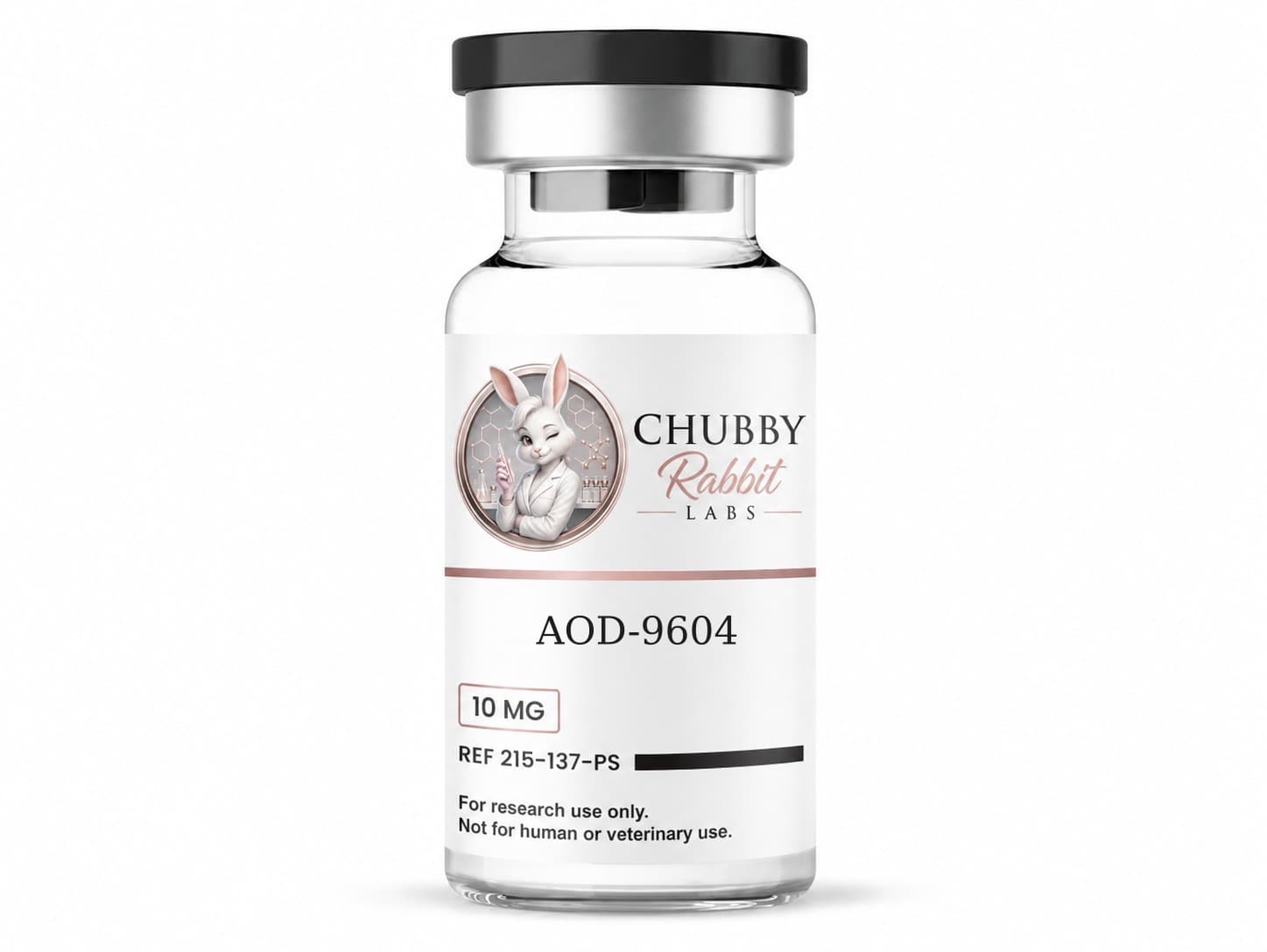
AOD-9604 vial
GLP-1 / Metabolic
GLP-1 / Metabolic

AOD-9604

Research use only

From
$155
Select size

Order 3+ and save. Contact us for bulk pricing.

Research Overview

AOD-9604 is a synthetic peptide corresponding to amino acid residues 177–191 of the human growth hormone sequence (Tyr-hGH 177-191), with the addition of an N-terminal tyrosine and a disulfide bond between cysteine residues that mimics the native C-terminal loop structure of GH. The compound was developed as a fragment of GH that research suggested retained the lipolytic properties of the full-length molecule while lacking the insulin-like metabolic activity and GH receptor-mediated IGF-1 induction associated with intact GH. Early work by Heffernan, Ng, and colleagues at Monash University and Metabolic Pharmaceuticals provided the primary structural and pharmacological characterization of this fragment in animal models. Preclinical studies in rodent obesity models, particularly the ob/ob mouse and diet-induced obesity (DIO) models, have examined the effects of AOD-9604 on fat mass. Research published in peer-reviewed journals reports that chronic AOD-9604 administration in obese mice was associated with significant reductions in body fat percentage, increased fat oxidation rates measured by indirect calorimetry, and preservation of lean mass relative to untreated obese controls. Studies indicate that these effects were not accompanied by detectable changes in IGF-1 levels, fasting glucose, or insulin sensitivity, distinguishing AOD-9604's metabolic profile from that of recombinant human GH, which produces measurable insulin resistance and IGF-1 elevation. The proposed mechanism of AOD-9604's lipolytic activity involves stimulation of β3-adrenergic receptor pathways and activation of hormone-sensitive lipase (HSL) in adipose tissue, independent of GH receptor binding. Research in adipocyte cell culture models has reported that AOD-9604 can stimulate lipolysis (measured as glycerol release) in isolated rat adipocytes. Some studies have proposed that the C-terminal GH fragment interacts with a receptor or binding site distinct from the classical GH receptor, though the precise molecular target has not been definitively characterized in the published literature. Investigations have also examined whether AOD-9604 influences leptin secretion or hypothalamic appetite regulation, with inconsistent findings across different animal models. Beyond metabolic research, preclinical studies have examined AOD-9604 in the context of cartilage and bone repair. In vitro studies using chondrocyte cultures and in vivo studies in rat and rabbit osteoarthritis models have reported that AOD-9604 treatment was associated with increased proteoglycan synthesis, reduced chondrocyte apoptosis, and attenuated articular cartilage degradation relative to controls. Some animal models of osteochondral defect repair have reported enhanced histological scores for cartilage regeneration in AOD-9604-treated subjects. These findings expanded preclinical interest in AOD-9604 beyond its original anti-obesity focus. References: [1] Heffernan MA, Thorburn AW, Fam BC, et al. (2001). Increase of fat oxidation and weight loss in obese mice caused by chronic treatment with human growth hormone fragment 176-191. International Journal of Obesity. 25(10):1442–1449. PMID: 11673764. [2] Ng FM, Sun J, Sharma L, Libinaka R, Jiang WJ, Gianello R. (2000). Metabolic studies of a synthetic lipolytic domain (AOD9604) of human growth hormone. Hormone Research. 53(6):274–278. PMID: 11146368. [3] Heffernan M, Jiang WJ, Thorburn AW, Ng FM. (1999). Effects of oral administration of a synthetic fragment of human growth hormone on lipid metabolism. American Journal of Physiology. 277(1 Pt 1):E191–199. PMID: 10409143. [4] Kwon DR, Park GY, Lee SC. (2014). Treatment of knee osteoarthritis with a new peptide (AOD-9604) in a rabbit model. Annals of Physical and Rehabilitation Medicine. 57:S392. doi:10.1016/j.rehab.2014.03.1467. [5] Stier H, Vos E, Kennel L. (2013). Safety and tolerability of the growth hormone fragment AOD-9604. International Journal of Molecular Sciences. 14(10):20073–20087. PMID: 24084727. For research use only. Not for human or veterinary use.