
What Research Use Only Means
A plain-language guide to the RUO designation, the regulatory framework around it, and what it actually obliges a supplier to say.
Research Use Only is a regulatory designation, not a marketing label. The phrase carries a specific meaning under 21 CFR and parallel international frameworks, and that meaning constrains both what a supplier can claim about a compound and what a buyer can reasonably do with it.
The short version: RUO compounds are intended for in-vitro and in-vivo research conducted by qualified investigators in appropriate facilities. They are not offered for food, drug, cosmetic, veterinary, agricultural, or household use, and are not represented as being safe, effective, or appropriate for any application outside research.
What RUO permits a supplier to do
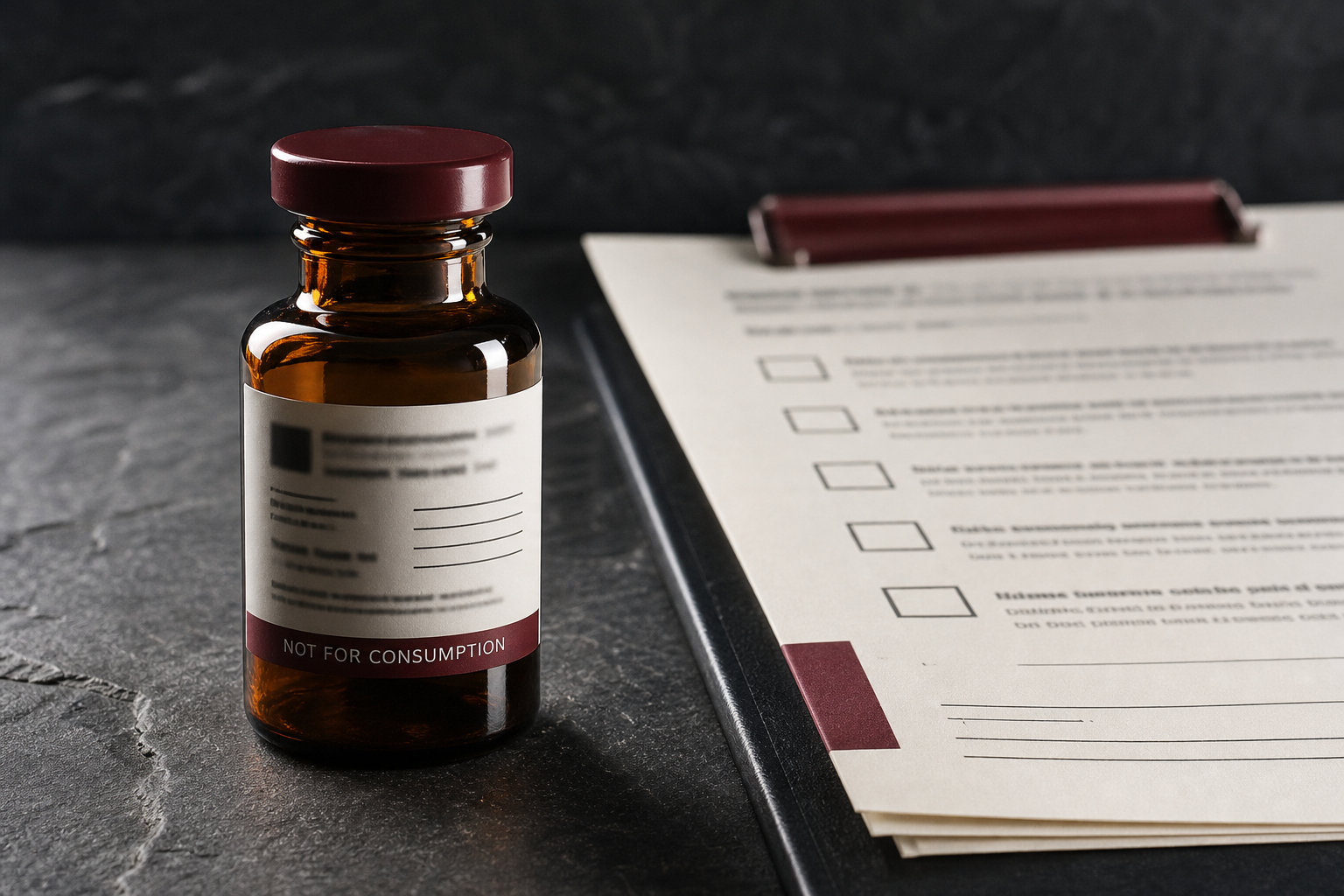
Suppliers operating under the RUO framework may produce, advertise, and sell compounds for research purposes. Documentation expectations include accurate identification of the compound, an honest representation of purity, and clear labeling that the product is not intended for human or veterinary application.
What RUO does not permit
What the framework does not permit is marketing research compounds with implied or stated buyer outcomes. This includes wellness or performance positioning, preparation schedules for non-laboratory application, and any framing that positions the product outside qualified research workflows.

Subsequent posts in this series unpack specific corollaries of the RUO designation, including how Certificate of Analysis documentation fits into the picture and where the limits of supplier-side documentation lie.
Research Use Only
This product is supplied strictly for laboratory research workflows. It is not offered for food, drug, cosmetic, veterinary, agricultural, or household use. By purchasing, the buyer represents they are a qualified researcher and accepts all responsibility for proper handling, storage, and lawful research use.